|
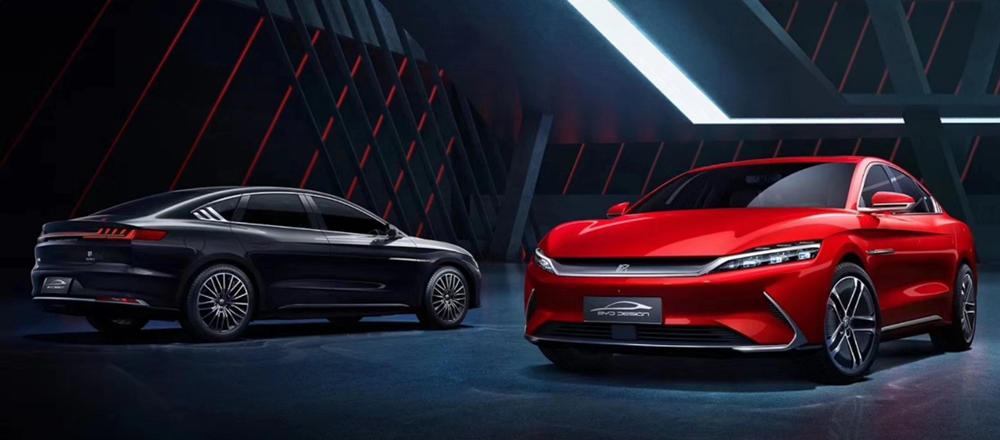
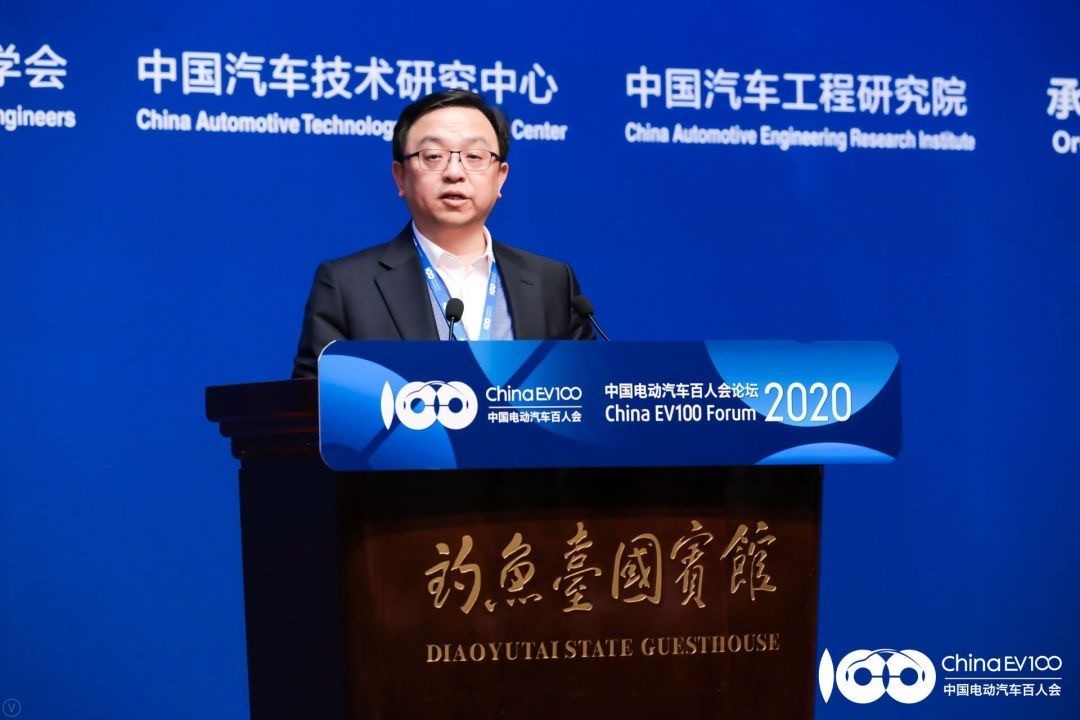
Entering the post-subsidy era, technology madman Wang Chuanfu once again led BYD to conquer the high ground of new technologies. He recently revealed at the C100 Forum that BYD's self-developed "blade battery" will be mass-produced at its Chongqing factory in March this year, and BYD Han, which will be launched in June, will It is the first to be carried, which marks that BYD has never given up on lithium iron phosphate battery technology, and shows the confidence that it is determined to win on this track.
How sharp is the "blade"? The "blade battery" mentioned by Wang Chuanfu was evaluated by Ouyang Minggao, academician of the Chinese Academy of Sciences and vice chairman of the China Electric Vehicle Association, as the most beautiful technological innovation of battery companies in terms of specific energy of the battery pack system last year.
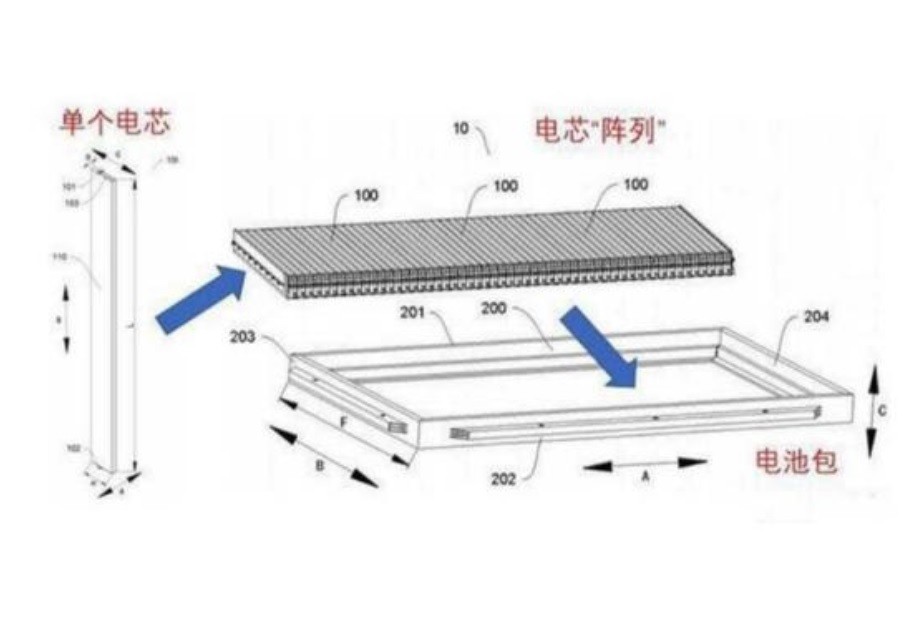
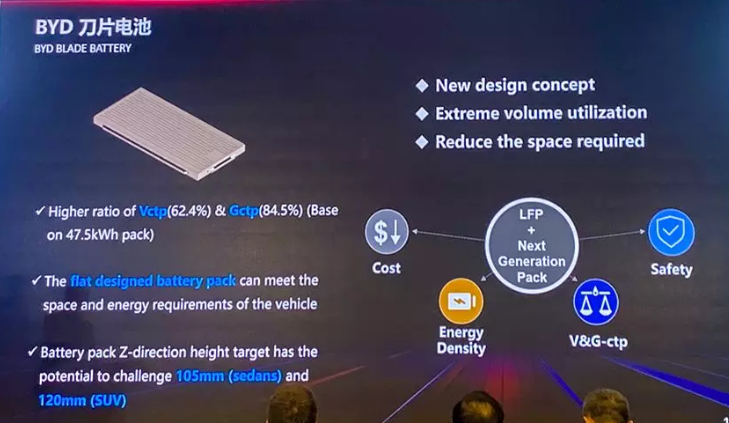
The blade battery is called "Super Iron Lithium Battery" by BYD. The reason why it is named "Blade" is because the shape of this battery is compared with the traditional square battery, and the whole battery is like a flat long blade. According to the BYD patent of the State Intellectual Property Office, the length of the "blade battery" can reach up to 2500mm, which is more than 10 times that of the traditional ordinary lithium iron phosphate battery, which greatly improves the grouping efficiency of the battery cells, and can adjust the size based on different needs A series of batteries
The volume specific energy density of the blade battery is 50% higher than that of the traditional lithium iron phosphate battery. According to the patent, the volume energy density of the "blade battery" technology PACK exceeds 330Wh/L, which can be increased by more than 30% compared with the original battery system. By saving materials and labor costs, the cost of battery packs is expected to be reduced by 30%. The discharge rate has also been greatly increased, with a service life of up to 8 years and 1.2 million kilometers, and a cruising range of up to 600 kilometers. Since the "blade battery" is thinner than the traditional square battery, the heat dissipation effect is better. Academician Ouyang Minggao said, "Blade batteries are connected on both sides and used as cooling air ducts. All kinds of things are placed on both sides, and nothing else is placed in the middle. The rigidity and strength of stacking one by one are very good, and it can also be used as a structure. This is a very important innovation. The blade battery technology can effectively alleviate the short board of the volume specific energy of the previous lithium iron phosphate battery. The volume of an A0-class model can be installed to nearly 60kWh, which can basically solve the mileage problem.” According to the analysis of Everbright Securities, the "blade battery" is a new solution developed from the overall level of vehicles, battery packs and batteries. The effect of structural improvement is very obvious. From the analysis of data results, there may also be the possibility of improving the internal materials of batteries. . Is the spring of lithium iron phosphate coming? In 2019, many spontaneous combustion incidents of new energy vehicles occurred frequently. How to ensure the safety of new energy vehicles has become the focus of attention in the industry. In the original era of high subsidies, high energy density and high mileage were the core indicators. More and more car companies adopted ternary lithium batteries with a high proportion of nickel, from "532" to "622" to "811" "The cobalt-manganese component that maintains battery stability only accounts for about 20%, and the cruising range has indeed been greatly improved, but the battery safety risk is also increasing. At the just-concluded sub-forum on advanced safety technology of electric vehicles of the Committee of 100, Sun Fengchun, academician of the Chinese Academy of Engineering and professor of Beijing Institute of Technology, said that passenger vehicles are currently the main force for the promotion of new energy vehicles, with an increase of 8.5% in 2019 compared to 2018. The total number of vehicles connected to the national platform also exceeded 78%. But at the same time, passenger car safety accidents accounted for a relatively high proportion, reaching 57%. The static state after fully charged is the main cause of fire accidents. Most of the vehicle combustion accidents occurred in the high SOC state, among which the accident rate of more than 85% accounted for 57%, and the proportion of SOC of 100% was 14%. The accident rate of ternary lithium batteries accounted for the highest proportion, reaching 89%. From the perspective of battery thermal stability alone, the thermal runaway temperature of the ternary lithium battery is lower than 300°C, which requires very high requirements on the battery management system, and requires an anti-overheating protection device and a battery management system to protect the safety of the battery. However, the thermal runaway temperature of lithium iron phosphate batteries is generally at 500-600°C, and its internal chemical components begin to decompose. Therefore, in terms of safety, which is currently the most important aspect, lithium iron phosphate batteries are even better. Wang Chuanfu pointed out at the meeting of 100 people, "To strengthen the construction of the industry safety standard system, we need to be more cautious when it comes to safe power batteries." In 2019, BYD's lithium iron phosphate battery shipments fell by 37%. CITIC Securities predicts that after 2020, "blade battery" technology will drive iron lithium to pick up, and BYD's lithium iron phosphate battery installed capacity will increase significantly.
As the country's largest shipper of lithium iron phosphate batteries, BYD has great market scale and cost advantages. Technological innovation has promoted a substantial increase in the volumetric energy density of lithium iron phosphate batteries, and the competitive landscape of ternary lithium batteries is expected to be broken.
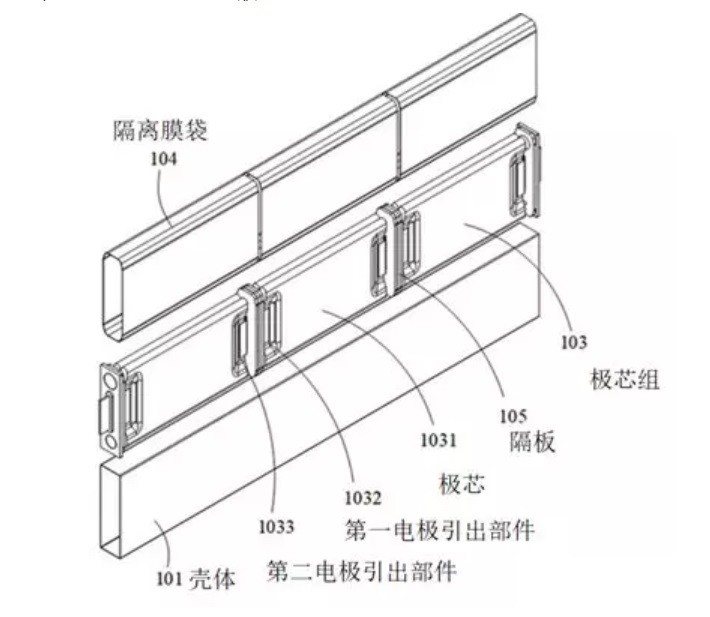
Although BYD has not publicly stated whether the "blade battery" will be supplied externally, many car companies seem to have begun to wait and see. 二、Analysis of BYD Blade Cell Technology From the perspective of this battery core, the height of 118 is actually made according to the current normal winding core, and the thickness of 13.5 is actually not much more than the thickness of the soft package. Mainly from 435mm to 905mm, or even higher to 2500, how is this battery connected? This is actually a bit similar to the very hot Combo before. The battery cell includes a long battery "module", including the shell and the winding core assembly inside, including multiple pole core groups. These pole cores can be made in series. , can also be made in parallel.
Under the scheme of series connection, a separator is arranged between two adjacent pole core groups, and the space of the battery core is divided into several accommodation cavities, which form a similar honeycomb structure and have sealing and liquid injection channels. In the series structure, a cell is connected in series to form a small module of 3.2V*3=9.6V. There are many design points when designing in series: 1)In the series design, due to the different voltages between different pole core groups, the local potential of the aluminum shell will be too low, which will easily lead to lithium ions embedded in the shell, forming a lithium aluminum alloy to corrode the aluminum shell, and between the shell and the pole core set Set the isolation film to isolate the contact between the electrolyte and the shell 2) When the electrolytes in different pole core groups are connected, there is an internal short circuit problem; there is a high potential difference between different pole core groups (the LFP potential difference is about 4.0-7.6V), and the electrolyte will be damaged due to The large potential difference leads to decomposition and affects the performance of the battery, so the separator is designed 3)The pole core connector includes a copper connection part and an aluminum connection part. There is a potential difference between copper and aluminum to lithium, and the contact position of the copper connection part and the aluminum connection part is prone to corrosion at the contact position of the electrolyte, so the isolation is used in the design Board, and set up a package structure to package the pole core connectors in the connection through holes. Since the capacity is not large due to the series connection, it is estimated that there will be some benefits in PHEVs. In addition, BYD can indeed increase the voltage, not limited to 400V , so the battery capacity can be smaller. The parallel structure is even more powerful. This is to combine the two taps on the single end of the cell and the taps on both sides. This is equivalent to using two series paths, but connecting in series at one section, so that the cells are connected one by one. connect them. The details of this battery cell have to be digested. I believe that the first version of the battery cell we can see is this, which is more reliable than the above series connection, and can increase the capacity. Source: EV Vision and Automotive Electronics Design --- Shenzhen iYPOWER Co., Ltd. Focus on high-end power and energy storage lithium batteries www.iypower.com |
Copyright © 2016 深圳爱阳动力有限公司版权所有 网站地图 粤ICP备15022706号-1



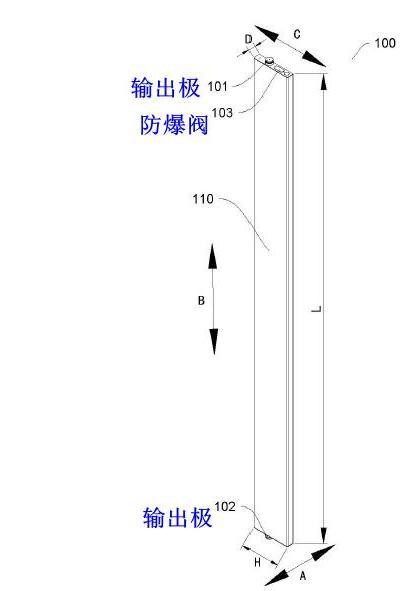 比亚迪刀片电芯形状示意图(来源:国家知识产权局)